Buffalo Milk vs Cow Milk: Which One Is Right for Your Family?
A practical guide to taste, texture, chai, yoghurt, paneer, and everyday family uses for buffalo milk and cow milk.
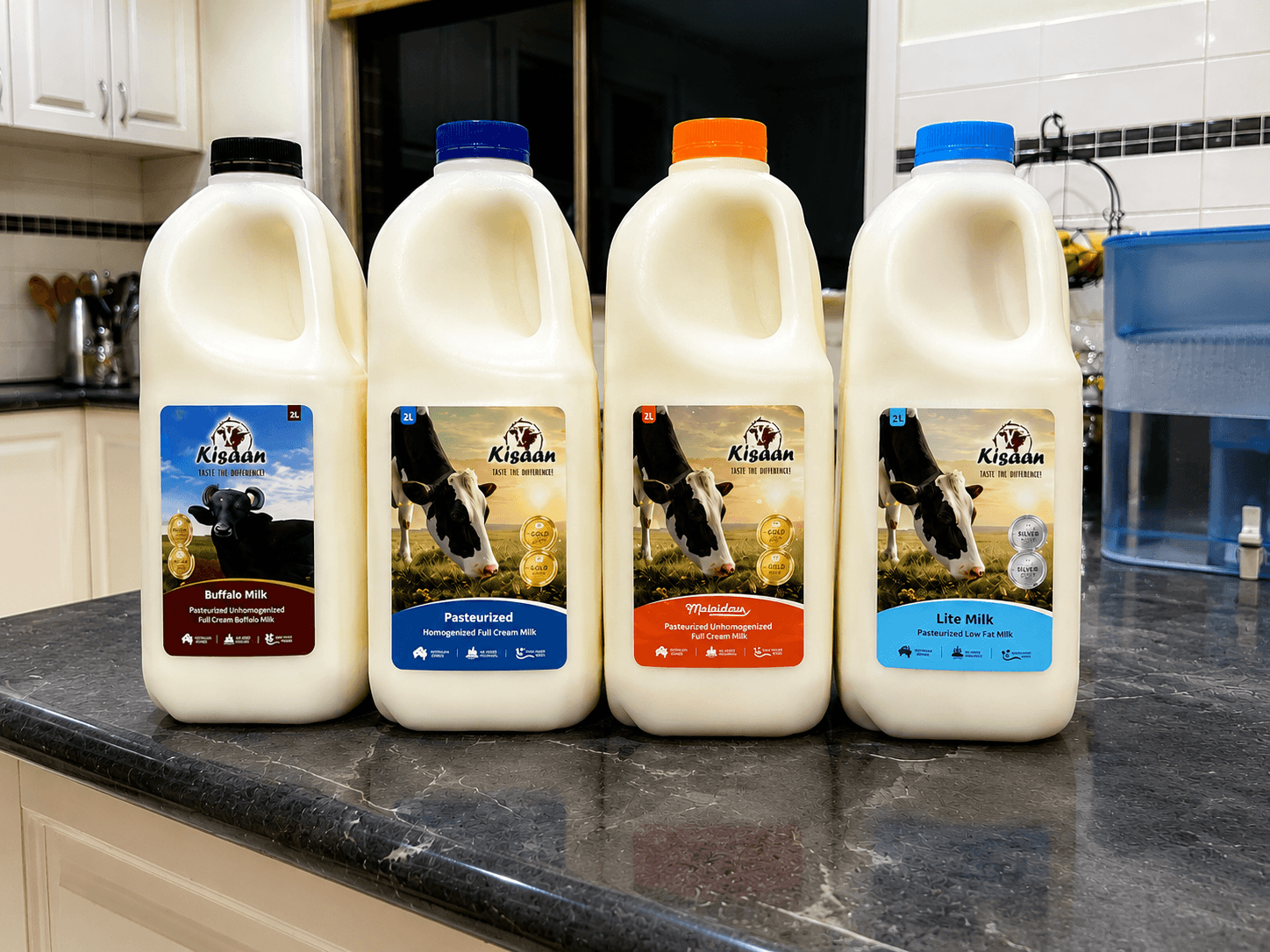
Walk into most Australian supermarkets and you'll find shelves lined with different types of milk. Full cream, low fat, skim, organic, lactose-free; the choices can feel endless. But one type of milk continues to attract attention among both multicultural families and curious Australian consumers: buffalo milk.
For many Indian, Pakistani, Sri Lankan, and Nepalese families living in Australia, buffalo milk is nothing new. It is the milk many grew up drinking. It is what went into the morning chai, the homemade yoghurt setting overnight in the kitchen, and the fresh paneer prepared for family meals.
For many Australians, cow milk remains the familiar choice. It is what they have always known and what most households keep in the fridge. So where does buffalo milk fit in? Is it really different from cow milk? And if you are choosing between the two, which one makes the most sense for your family's lifestyle?
The answer is not about finding a winner. It is about understanding what makes each milk unique and choosing the option that best suits your taste, cooking habits, and everyday needs.
Two Different Milks, Two Different Experiences
At first glance, buffalo milk and cow milk might seem very similar. Both are natural dairy products that can be enjoyed on their own or used in cooking, baking, and beverages. But pour them into two glasses side by side and you will notice some differences straight away.
Buffalo milk often appears richer and stark white in colour. This distinctive porcelain-white look happens because buffaloes efficiently convert beta-carotene from their diet into Vitamin A inside the milk. Cow milk, on the other hand, retains a slight golden or creamy hue from leftover carotene, making it a familiar sight in Australian homes.
The difference becomes even more noticeable once you taste them. Buffalo milk is often associated with a rich, velvety mouthfeel. Cow milk tends to be lighter, fresher, and more delicate on the palate. Neither is better; they simply offer different culinary experiences.
Why Buffalo Milk Has Stayed Popular for Generations
For many South Asian families, buffalo milk is not viewed as a specialty product. It is simply part of everyday life. Long before milk became something people compared online or discussed in health forums, buffalo milk was being used in kitchens across India and Pakistan for practical reasons. Families used what was available locally, and over time, certain recipes became closely associated with its unique properties.
Think about traditional staples like:
- Homemade paneer
- Dahi or thick yoghurt
- Kheer and kulfi
- Traditional South Asian sweets
Many people living in Australia today continue these traditions because they enjoy the exact taste and texture that buffalo milk brings to these recipes. Food is deeply connected to memories, family, and culture. That is why many households continue to seek out buffalo milk even after moving halfway across the world.
Why More Australians Are Curious About Buffalo Milk
At the same time, buffalo milk is attracting attention from people who did not grow up drinking it. Australian consumers have become increasingly interested in understanding how food is produced and exploring premium alternatives to standard supermarket products.
We are seeing a strong wave of interest in artisan foods, farm-fresh produce, traditional dairy methods, and authentic cooking experiences. Buffalo milk fits naturally into this trend. Many people try it for the first time out of culinary curiosity. Others discover it through specialty cafes or multicultural food communities. Once they experience its rich texture and depth of flavour, it can become a regular part of the weekly shop.
Chai Lovers Usually Have a Favourite
Ask ten people what makes a perfect cup of chai and you will probably get ten different answers. Some focus entirely on the tea leaves, while others insist it is all about the balance of spices. But ask a purist, and they will tell you that the milk matters just as much as the blend.
For generations, buffalo milk has been the gold standard for traditional chai because of the rich, creamy texture it creates. It holds up beautifully against strong black tea and robust spices like cardamom, ginger, and cloves without getting watered down. The result is a full-bodied, comforting cup with deep dairy flavour.
That does not mean cow milk cannot make an excellent chai. Millions of people use it every day and love the lighter, brighter profile it provides. The choice depends on the kind of morning ritual you are looking for.
Coffee, Smoothies, and Modern Australian Kitchens
Today's kitchens are more diverse and flexible than ever. One household might use milk for an authentic chai at sunrise, protein smoothies after a morning gym session, standard coffees during the workday, and detailed dessert recipes in the evening.
This is where understanding processing methods becomes helpful. If you are curious about how milk processing impacts your morning coffee texturing or baking consistency, it is worth exploring the differences between homogenised and un-homogenised milk.
Many families choose to keep a couple of different options in the fridge, using buffalo milk for drinks and recipes where body and texture are paramount, and relying on cow milk to blend seamlessly into everyday breakfast routines.
Why Homemade Yoghurt Enthusiasts Value Buffalo Milk
If you have ever made yoghurt at home, you know that your choice of milk dictates the final result. For many families, making a fresh batch of yoghurt is not just a kitchen chore. It is a weekly ritual prepared, left to set in a warm spot overnight, and enjoyed throughout the week.
Because buffalo milk naturally contains less water and a higher proportion of milk solids, it yields a thick, naturally creamy yoghurt without needing to add extra milk powder or thickeners. Many households still prefer cow milk because they enjoy a lighter, slightly more pourable consistency. It simply comes down to the style of yoghurt your family prefers on the breakfast table.
Paneer Starts With High-Quality Milk
Paneer has grown in popularity throughout Australia, not just within South Asian households but also among everyday cooks looking for a versatile, high-protein vegetarian ingredient.
Anyone who has tried making paneer from scratch knows that the milk behaves like the foundation of the dish. Because of its natural composition, buffalo milk delivers a distinctively soft, moist, and high-yielding paneer that holds its shape beautifully whether it is tossed into simmering curries, grilled on the barbecue, or sliced into fresh wraps.
Traditional Dairy Products Are Finding a New Audience
Something interesting is happening across the modern Australian food landscape. Consumers are not just looking for convenience anymore; they are looking for authenticity. People want to know the origin of their food, the stories behind the brands, and experiences that feel genuinely grounded in tradition.
This cultural shift explains why traditional dairy products are gaining mainstream attention. Cream-on-top milk, heritage styles of yoghurt, traditional ghee, and fresh buffalo milk are all benefiting from a renewed appreciation for food traditions. What was once considered a niche specialty item is now finding a regular home in modern kitchens.
Choosing the Right Milk for Your Family
If you are trying to decide how to balance both options in your household, start by looking at your weekly menu and asking yourself a simple question: how will we use it most?
Explore Buffalo Milk If You Love
- Traditional, slow-brewed chai
- Thick, set homemade yoghurt and kheer
- Crafting fresh paneer at home
- Rich, indulgent dairy profiles
Stick with Cow Milk If You Prefer
- Standard breakfast cereals and granola
- Light everyday coffees and quick smoothies
- Routine baking and daily cooking
- Easy, refreshing everyday drinking
Exploring Kisaan's Milk Range
At Kisaan, we understand that every family brings different traditions, preferences, and lifestyles to the table. That is why we offer a diverse range of fresh dairy products crafted to suit specific household needs.
For those looking to capture that classic, rich dairy experience for chai, homemade yoghurt, or fresh paneer, our Pasteurized Un-Homogenized Buffalo Milk remains a popular choice.
If you love a traditional, nostalgic cream-on-top finish for breakfast or coffee, our Pasteurized Un-Homogenized Full Cream Cow Milk offers that heritage experience. For households focused on certified options, you can explore our Pasteurized Homogenized Organic Milk - 2L Bottle, while those looking for a lighter everyday alternative can reach for our Pasteurized Homogenized Low Fat Milk.
No matter which bottle finds its place in your fridge door, our mission stays the same: delivering fresh, reliable, high-quality dairy for Australian families.
Please note: The traits and comparisons shared above are based on everyday home cooking, taste preferences, and traditional consumer perspectives rather than scientific or clinical studies. The best way to compare them is to shop Kisaan's fresh cow and buffalo milk and experience the difference around your own family table.
Frequently Asked Questions
What is the main difference between buffalo milk and cow milk?
The most immediate differences are taste, texture, and appearance. Buffalo milk is characteristically thick, creamy, and porcelain-white, whereas cow milk is typically lighter, milder, and has a slight golden-cream hue.
Why do many families prefer buffalo milk for chai?
Buffalo milk's rich body and natural creaminess allow it to emulsify beautifully with strong black tea leaves and spices, creating a deeply comforting, full-bodied cup that does not taste watered down.
Is buffalo milk commonly used in Indian cooking?
Yes. For generations, buffalo milk has been the traditional backbone for making daily chai, setting thick dahi, pressing fresh paneer, and preparing slow-cooked desserts like kheer and kulfi.
Can I make yoghurt using buffalo milk?
Yes. Due to its naturally high milk solids, buffalo milk can produce thick, smooth, and creamy homemade yoghurt without needing artificial thickeners.
Is buffalo milk readily available in Australia?
Yes. While it was once difficult to track down, premium buffalo milk is now available in Australia through select specialty dairy brands, including Kisaan.
Which milk is better for making paneer?
Many home cooks prefer buffalo milk for paneer because its high fat and solid content yields a softer, more substantial curd that holds together well during cooking and grilling.
Why are more Australians trying buffalo milk?
A growing appreciation for artisan foods, whole ingredients, traditional food cultures, and authentic home-cooking experiences has encouraged more Australian consumers to look beyond standard supermarket dairy.
Can buffalo milk be used in morning coffee?
Yes. Buffalo milk can work well in coffee, especially for people who enjoy a velvety, creamy texture and a richer dairy body.
Is cow milk still the most popular choice in Australia?
Yes. Cow milk remains the mainstream favourite across Australian households and is widely available in skim, low-fat, organic, and full-cream varieties.
Can families use both buffalo milk and cow milk simultaneously?
Yes. Many Australian households keep both in rotation, using cow milk for cereals and daily smoothies while keeping buffalo milk for authentic cooking, baking, and specialty hot drinks.