What Is the Best Ghee in Australia? A Complete Buyer's Guide for Choosing Authentic Cow & Buffalo Ghee
Not all ghee is created equal. Here's how to compare ingredients, production methods, flavour, and value before choosing the right jar for your kitchen.
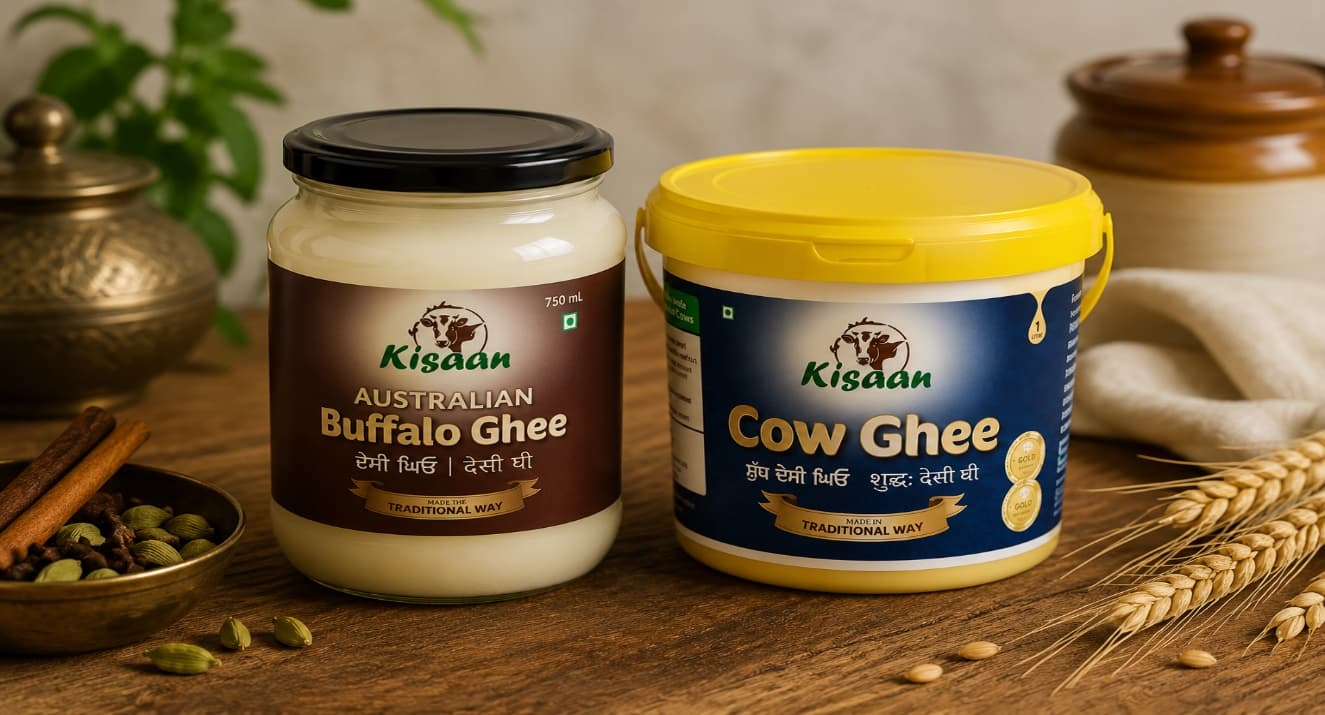
If you have ever searched for the best ghee in Australia, you have probably come away with more questions than answers. One jar promises a traditional Bilona process. Another highlights the milk source. Some labels say "pure" or "desi ghee", while prices can vary enough to make comparison difficult.
Then there is the choice between cow ghee and buffalo ghee. Does colour matter? Why do some jars have a stronger aroma? Is a higher price always a sign of better quality?
Choosing quality ghee is not about finding the most expensive jar or trusting the loudest claim. It is about understanding what goes into the product, how it is made, and whether it suits the way your family cooks. This guide gives you a practical way to make that decision for yourself.
Why More Australians Are Looking Beyond Supermarket Ghee
Australia's home kitchens are more diverse than ever. Families are preparing regional recipes, rediscovering traditional techniques, and paying closer attention to everyday ingredients. Products once found mainly in specialist grocers, including paneer, buffalo milk, and desi ghee, now have a much wider audience.
Ghee is a natural fit for this shift. It has been central to South Asian cooking for generations, from a spoonful over dal to the base of festive sweets. It is also used by Australian home cooks who value its rich flavour and versatility.
At the same time, shoppers want more information about sourcing, ingredients, and production. That curiosity is leading many families towards specialist dairy producers and services that offer a clearer connection between the farm, the product, and the kitchen. The same interest is behind the growth of farm-fresh dairy delivery in Melbourne.
What Makes Good Ghee?
At its simplest, ghee is clarified butter. Butter is heated so the water evaporates and the milk solids separate, leaving a concentrated cooking fat with its own aroma, texture, and flavour.
The basic idea is straightforward, but the finished result can vary with the dairy used, the production method, the heating process, and the way the ghee is cooled. One jar may release a warm, nutty aroma as it melts, while another may taste milder. Some batches set smoothly; others develop the lightly grainy texture many families know as danedar ghee.
Good ghee is therefore not defined by one visual test. It is the combination of a simple ingredient list, careful preparation, a clean finish, and reliable performance in the food you cook most often.
Start With the Ingredient List
The quickest way to understand a jar of ghee is to turn it around. Traditional ghee is made from dairy butter or milk fat, so the ingredient panel should be simple and clear.
If the label includes vegetable oils, hydrogenated fats, added flavours, or other ingredients, pause and decide whether that matches what you intended to buy. A short ingredient list does not tell you everything about quality, but it is a useful first filter.
Next, look for information about the dairy source and preparation method. A producer that clearly explains what is inside the jar makes it easier to compare substance, not just packaging.
Traditional Bilona Ghee: Why the Method Matters
If you have researched premium cow ghee, you have probably seen the word Bilona. The traditional Bilona process starts with milk. The milk is cultured into curd, the curd is churned to separate butter, and that butter is slowly heated to make ghee.
It is a more involved process than simply clarifying commercially produced butter. For people who grew up with homemade ghee, it can also bring back the familiar aroma and character of a product prepared patiently in the family kitchen.
The method alone is not a guarantee of quality. The dairy, temperature control, and consistency of each batch still matter. But when a producer explains the Bilona process clearly, you have useful information about how the ghee was made. Our guide to choosing traditional Bilona cow ghee in Australia explores the method in more detail.
Does a Higher Price Mean Better Ghee?
Not automatically. Price can reflect the dairy source, a slower production method, smaller batches, packaging, transport, and retail distribution. Those factors can be meaningful, but the price tag does not replace the need to read the label.
Instead of comparing cost alone, ask a few practical questions:
- Does the producer explain how the ghee is made?
- Is the ingredient list simple and transparent?
- Does the flavour profile match the dishes you prepare?
- Is the pack size realistic for how often your household uses ghee?
A jar that fits your daily cooking and is used completely can offer better value than a premium product that never becomes part of your routine.
Cow Ghee vs Buffalo Ghee: Which Belongs in Your Kitchen?
Both cow and buffalo ghee have long histories in traditional cooking. Neither is a universal winner; the better choice depends on the flavour, texture, and recipes your family prefers.
| Feature | Cow ghee | Buffalo ghee |
|---|---|---|
| Typical colour | Golden yellow, with natural variation between batches | Creamy white to pale yellow |
| Flavour | Balanced, aromatic, and gently nutty | Fuller, richer dairy character |
| Texture | Smooth or lightly grainy, depending on temperature | Dense and often more granular |
| Everyday fit | Dal, rice, rotis, vegetables, and family meals | Mithai, rich curries, and festive cooking |
| Best choice for | A versatile everyday jar | A more robust, creamy finish |
Choose cow ghee for everyday versatility
Cow ghee is often appreciated for its golden colour, aromatic character, and balanced flavour. It works easily across dal, vegetables, rice, rotis, parathas, and many everyday family recipes without taking over the plate.
Choose buffalo ghee for a fuller dairy finish
Buffalo ghee is naturally lighter in colour and typically has a denser texture with a richer dairy profile. Many cooks enjoy it in mithai, rich curries, and recipes where a more pronounced finish complements the dish.
Plenty of households keep both: cow ghee for the weekday kitchen and buffalo ghee for sweets, special meals, or recipes that benefit from added richness. For a closer comparison, read Buffalo Ghee vs Cow Ghee: Which Is Better for Australian Families?
How to Choose Good Ghee With Confidence
Look beyond the front label
The front of a jar is designed to catch your attention. The ingredient panel and product information tell the more useful story. Look for clear sourcing, an explained production method, and contact details for the producer.
Do not judge ghee by colour alone
Cow ghee is often naturally golden, while buffalo ghee is usually pale or nearly white. Colour can also shift with the season, dairy source, cooling process, and room temperature. A lighter jar is not automatically less pure, and a deeper gold is not automatically better.
Pay attention to aroma and flavour
For regular ghee users, the first sign of a favourite jar is often the aroma released in a warm pan. Good ghee should smell pleasant and taste clean, whether it is melting into rice, carrying spices in a tadka, or finishing a fresh roti.
Expect natural texture changes
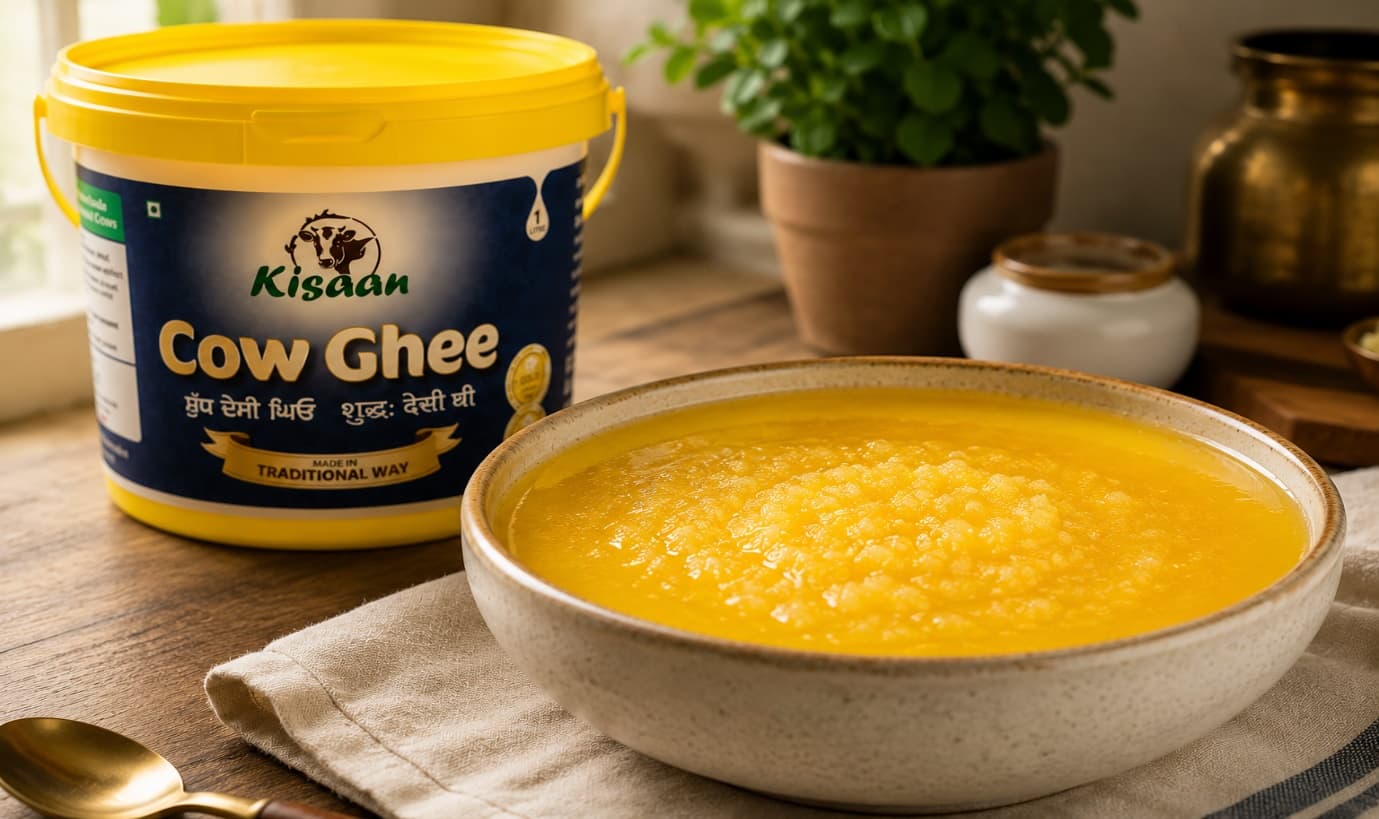
Ghee can look liquid, smooth, semi-solid, or grainy as the temperature changes. Those shifts are normal. Texture is useful for understanding the product, but it should not be treated as a single test of purity.
A Simple Ghee Buyer's Checklist
When several jars look similar, use this quick check before adding one to your cart.
- The ingredient list is short and easy to understand.
- The producer explains what the ghee is made from and how it is prepared.
- The cow or buffalo milk source is identified clearly.
- The flavour profile suits the food your family cooks most often.
- The brand provides useful product information beyond front-label marketing.
Three Common Myths About Ghee
Myth 1: Expensive ghee is always better
A higher price may reflect small-batch production or a more involved process, but it does not answer every quality question. Ingredients, transparency, flavour, and fit for your cooking matter more than price alone.
Myth 2: All ghee tastes the same
The dairy source, heating process, and preparation method all influence aroma, flavour, and texture. That is why two genuine dairy ghees can still taste noticeably different side by side.
Myth 3: White ghee is not pure
This myth usually comes from comparing buffalo ghee with cow ghee. Buffalo ghee is naturally much lighter, while cow ghee is generally more golden. Purity comes down to ingredients and preparation, not whether the ghee is white or yellow.
Why More Families Are Choosing Kisaan Ghee
Kisaan was created around a simple idea: bring trusted dairy from local Victorian farms to households that value freshness, tradition, and consistency. Instead of making families choose between "good" and "better", our cow and buffalo ghees are designed for different tastes and cooking styles.
Bilona Cow Ghee
Kisaan Cow Ghee is prepared using the traditional Bilona method for families who appreciate an aromatic, golden ghee with the versatility to move from weekday tadka to festive recipes.
Australian Buffalo Ghee
Kisaan Australian Buffalo Ghee offers a creamier colour, denser texture, and fuller dairy character. It is a natural fit for cooks who want a richer finish in sweets, curries, and special family dishes.
Kisaan's dairy range has also received recognition at the Dairy Industry Association of Australia Awards of Excellence. Awards are not the only reason to choose a product, but independent judging provides another useful signal alongside the ingredient list and your own cooking experience.
More Than Just Ghee
Many customers first try Kisaan through one product and gradually build a dairy basket around the ingredients they use each week. Alongside cow and buffalo ghee, the range includes:
- Cream-on-top cow milk
- Buffalo milk
- Paneer
- Dahi and yoghurt
- Butter and makhan
If you are curious why cream rises naturally in some bottles, our guide to homogenised and un-homogenised milk explains the difference.
So, What Is the Best Ghee in Australia?
There is no single winner for every household. The best ghee is made from quality dairy, prepared with care, transparent about its ingredients, and enjoyable in the food you cook every day.
For some families, that will be Bilona cow ghee. For others, buffalo ghee will be the better match. Once you understand the difference, the decision becomes much simpler: choose the jar that fits your recipes, your taste, and your table.
Ready to choose your ghee? Explore Kisaan Bilona Cow Ghee and Australian Buffalo Ghee, then check delivery availability for your address.
Shop Kisaan gheeFrequently Asked Questions
What is the best ghee in Australia?
The best ghee is the one that combines a clear ingredient list, a production method you understand, consistent flavour, and a profile that suits your cooking. Cow ghee is often the most versatile everyday choice, while buffalo ghee suits cooks who prefer a fuller dairy flavour and denser texture.
What is Bilona cow ghee?
Bilona cow ghee is made through a traditional cultured process. Milk is set into curd, the curd is churned to separate butter, and the butter is then gently heated to make ghee. The method is valued for its connection to traditional dairy craftsmanship.
Is buffalo ghee different from cow ghee?
Yes. Cow ghee is usually golden with a balanced, aromatic flavour. Buffalo ghee is naturally lighter in colour and tends to have a richer texture and fuller dairy character. Both can be authentic, high-quality choices.
Should pure ghee have a short ingredient list?
Traditional ghee is made from dairy butter or milk fat, so its ingredient list should be simple. Checking the label also helps you spot added vegetable oils, flavours, or other ingredients you may not want.
Does the colour of ghee show its quality?
No. Colour varies naturally with the type of milk, season, production method, and storage temperature. Cow ghee is often golden, while buffalo ghee is usually much lighter. Ingredients and production transparency are more useful quality checks than colour alone.
Can I buy Kisaan cow ghee and buffalo ghee online?
Yes. Kisaan offers both cow ghee and Australian buffalo ghee through its online shop. Delivery availability depends on your location, so check your address when ordering.